In the current wave of technology, artificial intelligence (AI) is reshaping the landscape of all walks of life, especially in the field of education and work. Nvidia CEO Jensen Huang predicted in a recent interview: "In the future, everyone will have their own AI mentor." This prophecy quickly sparked widespread attention and discussion. What is an AI Mentor? What will be the impact of its arrival? How will ordinary people respond to these changes? The editor of China Exportsemi will discuss these issues with you today.
1. AI Mentor: A Revolutionary Change in the Field of Education
The arrival of AI mentors is a revolutionary advance in the field of education. The traditional education model is limited by multiple factors such as teachers, time, and location, and often cannot achieve personalized teaching, and the popularization rate is limited. Through advanced natural language processing technology and deep learning algorithms, AI tutors are able to tailor learning plans for each student, helping them overcome learning challenges and give full play to everyone's potential.
(1) Break the limitations of traditional education
Traditional education models are often limited by geography, time, and teacher resources, especially in remote areas, where the shortage of high-quality educational resources makes many people miss out on equitable learning opportunities. The introduction of AI mentors has broken through these limitations. No matter where they are, with an internet connection, students can access tailored learning content and instruction anytime, anywhere. This means that AI tutors not only make education more accessible, but also provide a personalized learning experience for each student.
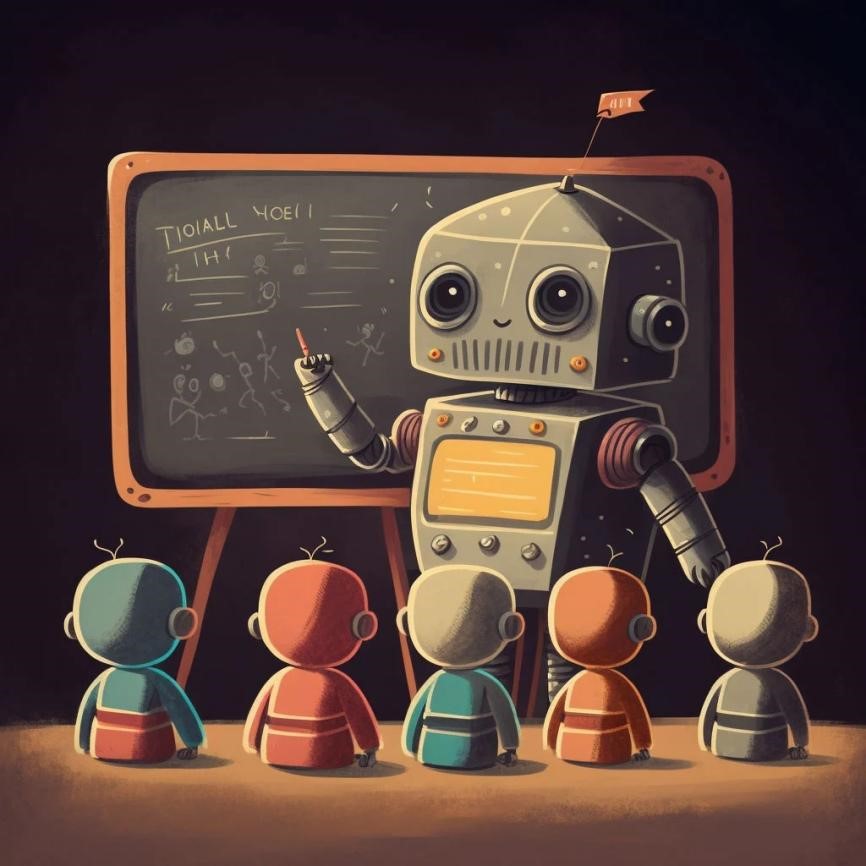
Pictured: Nvidia Jensen Huang predicts that "AI mentors" will disrupt education and work
(2) Personalized learning experience
AI tutors can track students' learning progress in real time, analyze their weak links, and push relevant learning content in a targeted manner. For example, for math subjects, AI tutors can automatically identify students' deficiencies in certain question types and adjust their learning plans to help students improve their knowledge mastery in weak areas. This highly personalized approach to learning can dramatically improve student learning and help them achieve more efficient and targeted learning outcomes.
(3) Stimulate innovation and creativity
Not only that, but AI tutors are also able to stimulate students' creativity. Through interaction and feedback, students are no longer just passively receiving knowledge, but also trying to solve problems and discover new ideas through communication with AI mentors. For example, in the process of learning programming, AI tutors can guide students to try different algorithms and challenge their thinking limits, thereby promoting the improvement of innovation ability.
2. AI Mentors: Changemakers in the workplace
In addition to the dramatic changes in education, AI mentors are also having a profound impact in the workplace. The introduction of AI will not only improve the productivity of employees, but will even revolutionize how and what work is done.
(1) Improve work efficiency
AI tutors have greatly improved work efficiency by automating a large number of repetitive tasks. In fields such as finance, healthcare, and law, AI tutors can analyze large amounts of data to help professionals make decisions, generate reports, or provide diagnostic support. For example, in the financial industry, AI mentors can quickly collate and analyze financial data to provide analysts with a basis for decision-making. According to a study by Duke University, 61% of large U.S. companies plan to use AI to automate some work tasks in the next year, which will greatly improve overall productivity.
(2) Change the way of working
The proliferation of AI mentors means that more and more low-value, repetitive work will be replaced by machines, while human employees will have more opportunities for high-value creative and strategic work. In the field of software development, AI mentors can assist programmers in writing code and debugging programs, thereby greatly improving development efficiency and work quality. In addition, the spread of AI will drive the further development of remote work, flexible work and other ways of working, changing the way employees work and the workplace.
(3) Create new employment opportunities
While AI mentors have the potential to replace some of the traditional low-skilled jobs, it will also create new ones. For example, new professions such as AI developers, data analysts, and AI ethics experts will continue to emerge. The global AI market is expected to reach $275 billion by 2025, which will create millions of jobs in related industries, especially in areas such as AI R&D, maintenance, education, and training.
3. Emerging Professions: Innovation Opportunities Brought by AI
The editor of China Exportsemi believes that the development of AI will inevitably lead to the loneliness and even death of some traditional professions, but at the same time, it will also lead to the emergence of a number of new professions. With the widespread application of AI, some repetitive, low-skilled jobs will gradually be replaced by intelligent technology, and high-skilled and innovation-driven occupations will become the new mainstream of employment. From AI mentors to AI ethics experts, the future career ecosystem will undergo profound changes. Let's explore each of these new professions and see how they are becoming mainstream with the help of AI.
With the popularization of AI technology, new types of occupations will gradually emerge. Here are some of the new types of careers that are likely to be widely developed in the age of AI:
(1) AI trainers and data annotators
The AI trainer will be responsible for providing the AI system with high-quality training data to ensure its functionality and accuracy. Data annotators need to accurately classify data and provide annotation support for AI models. This profession requires a meticulous working attitude and technical skills, especially when working with complex data sets.
(2) AI ethics experts
With the widespread application of AI technology, AI ethics have also attracted more and more attention. AI ethics experts will focus on developing and implementing ethical and legal standards for AI technologies to ensure that the use of AI does not negatively impact society. This profession will involve interdisciplinary collaboration, combining knowledge in fields such as technology, law, and sociology to ensure the safe development of AI.
(3) Human-machine collaboration experts
With the popularization of AI technology, human-machine collaboration will become an important way to work in the future. Human-robot collaboration experts will work to optimize the interface between AI and humans to ensure that the two can work efficiently and complement each other to improve productivity.
(4) Personalized AI consultants
Personalized AI consultants will focus on providing customized AI solutions for individuals or businesses, covering multiple areas from health management to corporate strategy. These consultants will tailor the right AI tools and services to their clients' needs to optimize their work and life.
Editor's view: AI triggers career change and embraces new opportunities
In the view of the editor of China Exportsemi, the arrival of AI is not only a challenge, but also an opportunity. Although it will replace some traditional professions, it will also bring the rise of countless new professions. The future of career ecology will be technology-driven, requiring both the ability to innovate and the integration of interdisciplinary knowledge. As Huang said, AI mentors will bring profound changes in education and the world of work, and in the future, we should not only face the difficulties that "unemployment" may bring, but also embrace new career opportunities. The advent of AI has promoted the innovation of professional forms, and also provided us with more room for growth and breakthroughs. We should not be afraid of change, but should take the initiative to embrace the new opportunities brought by AI, emerge in the new era, and promote our continuous progress and development.
In short, the era of AI has arrived, and we need to proactively adapt to this change, master new technologies, improve new skills, and embrace the future co-created with AI.