Recently, Huawei Technologies Co., Ltd. transferred its registered trademark "Xiangjie" to Beijing New Energy Vehicle Co., Ltd. Huawei applied for this trademark in May last year and completed the registration in November. Huawei has also applied for several other "Xiangjie" trademarks in various international classifications, including advertising sales, education, entertainment, and metal materials, which are currently "awaiting substantive examination." "Xiangjie" is a brand jointly developed by Huawei and Beiqi. Its first model, "Xiangjie S9," was released in April this year and is expected to officially launch in July-August. Positioned as a D-class car, the Xiangjie S9 features an Inside-Out design, maximizing cabin space with an interior length of up to 3460mm, aiming to compete with high-end models like the Mercedes S-Class, BMW 7 Series, and Audi A8L.
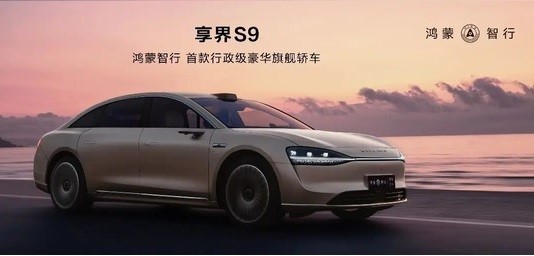
Image: Xiangjie S9 equipped with HarmonyOS intelligent driving system
Current Business Model of Huawei Electric Vehicles:
Huawei's business model in the electric vehicle (EV) sector is primarily based on the following aspects:
1. Technology Supplier: Huawei provides smart car components to automakers, such as in-car network modules, AR-HUD, and LiDAR.
2. HI (Huawei Inside) Model: Huawei offers a full-stack solution covering computing and communication architecture, smart cockpit, intelligent driving, and more, using the "HI" logo on cooperative models.
3. Smart Selection Car Model: Huawei deeply participates in product design, core component selection, marketing, and service systems of partner automakers, selling cooperative models in Huawei's terminal stores.
4. Ecological Cooperation: Huawei promotes the establishment of an intelligent vehicle technology ecosystem alliance, such as HarmonyOS, to collaboratively create smart EV products with partners.
5. R&D Investment: Huawei has invested heavily in intelligent vehicle solutions, with a total investment of $3 billion and a research team of 7,000 people.
Future Development Predictions:
1. Deepening Partnerships: Huawei may continue to expand cooperation with domestic and international automakers, driving smart EV development through technical collaboration and co-development.
2. Enhancing Brand Influence: With the promotion of brands like "Xiangjie" and the launch of new models, Huawei's brand influence in the smart EV field is expected to increase.
3. Technological Innovation and R&D: Huawei may continue to increase investment in smart driving, smart cockpit, and smart electric fields, driving technological breakthroughs and product innovation.
4. Market Expansion: Huawei is likely to push smart EV products into broader markets, including international markets, through partnerships.
5. Business Model Innovation: In the face of fierce market competition, Huawei may explore new business models such as subscription services and connected car services to provide differentiated user experiences.
6. Sustainable Development: As the world pursues carbon neutrality goals, Huawei may play a greater role in the sustainable development of smart EVs, promoting the integration of electrification, intelligence, and services.
In conclusion, Huawei's business model in the EV sector is gradually maturing. Through technological innovation and ecological cooperation, Huawei is continuously driving the development of the smart EV industry. In the future, Huawei is expected to play a more significant role in the smart EV field, offering consumers more intelligent and personalized travel experiences.